Judge: The Bold Voice of Urban Expression
In the ever-evolving landscape of typography, few fonts capture the essence of street culture and artistic rebellion as effectively as Judge. This graffiti-inspired typeface is more than just a visual choice—it’s a statement. With its dynamic strokes and rebellious flair, Judge brings the energy of urban art into the digital realm, making it a powerful tool for creators across various industries.
What Makes Judge Unique?
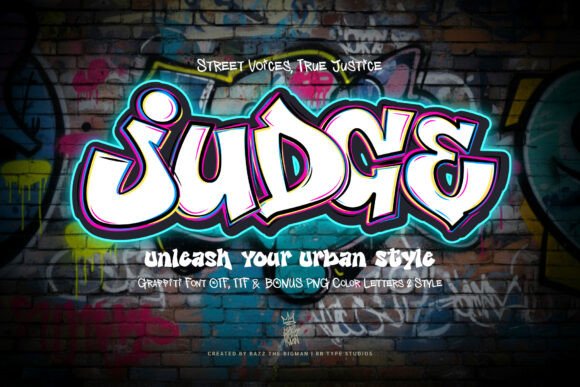
Judge is designed to embody the spirit of graffiti and streetwear. Its bold, uneven lines and exaggerated forms evoke the raw energy of city walls and underground art scenes. Unlike traditional fonts that prioritize uniformity, Judge embraces imperfection, offering a look that feels authentic and unfiltered.
This font isn’t just about aesthetics; it’s about attitude. Whether used in album covers, posters, or branding materials, Judge conveys a sense of defiance and confidence. It’s ideal for projects that aim to stand out and make a lasting impression.
Features That Set Judge Apart
- Dynamic Strokes: Judge features irregular, hand-drawn letterforms that mimic the style of real graffiti. This gives each character a unique personality, making it perfect for expressive designs.
- PUA Encoding: The font uses PUA (Private Use Area) encoding, which allows for easy access to all glyphs, swashes, and alternate characters. This means users can customize their work without limitations.
- Versatile Applications: From sport-themed graphics to album artwork, Judge adapts well to different creative needs. Its versatility makes it a go-to choice for designers looking to add a touch of urban flair.
The combination of these elements ensures that Judge is not only visually striking but also highly functional. Its design encourages creativity, allowing users to experiment with different layouts and styles.
Where Can You Use Judge?
Judge is particularly popular in the world of streetwear and music. Designers often use it for t-shirt graphics, band logos, and promotional materials. Its association with urban culture makes it a natural fit for brands that want to connect with younger, trend-conscious audiences.
Beyond fashion, Judge finds its place in poster design, event branding, and even digital content creation. For instance, a music festival might use Judge on its promotional posters to create an edgy, energetic vibe. Similarly, a sports team could incorporate the font into its merchandise to reflect a bold, competitive spirit.
For businesses looking to differentiate themselves, Judge offers a way to break away from conventional typography. It’s especially useful for startups or niche brands that want to establish a strong, memorable identity.
Who Benefits from Using Judge?
Judge appeals to a wide range of users, including graphic designers, artists, and small business owners. Its bold aesthetic is ideal for those who want to make a statement without relying on complex design elements.
Students and hobbyists also find value in Judge. It provides an accessible way to explore typography and express individuality through text. For professionals, it serves as a reliable tool for creating eye-catching visuals that align with modern design trends.
Additionally, educators and creative instructors may use Judge to teach students about the intersection of typography and culture. Its unique characteristics offer a practical example of how fonts can influence perception and communication.
Strengths and Considerations
One of Judge’s greatest strengths is its ability to convey emotion through form. The font’s irregularities and aggressive shapes evoke a sense of movement and intensity, making it ideal for high-impact designs. It’s also highly customizable, thanks to its PUA encoding, which allows for greater flexibility in layout and styling.
However, it’s important to note that Judge may not be suitable for every project. Its boldness can be overwhelming in certain contexts, such as formal documents or minimalist designs. Users should consider the tone and audience of their work before deciding to use this font.
Another consideration is readability. While Judge excels in visual impact, it may not be the best choice for long blocks of text. It works best when used sparingly, such as in headlines, logos, or short phrases that require attention-grabbing appeal.
Real-World Applications
Let’s look at some practical examples of how Judge can be used effectively:
- Music Album Art: A hip-hop artist might use Judge on their album cover to reflect the genre’s roots in street culture. The font adds a layer of authenticity and visual punch.
- Sport Branding: A sneaker brand could incorporate Judge into its logo to emphasize strength, speed, and a rebellious attitude. This helps reinforce the brand’s connection to athletic performance and urban lifestyle.
- Event Posters: A concert promoter might use Judge on a poster to create a sense of urgency and excitement. The font’s boldness draws attention and sets the tone for the event.
These examples illustrate how Judge can be adapted to different scenarios while maintaining its core identity. Its versatility ensures that it remains relevant across multiple industries and creative fields.
How to Evaluate if Judge Is Right for Your Project
Before using Judge, consider the following factors:
- Project Purpose: Does your design need a strong, attention-grabbing element? If so, Judge could be a great fit.
- Target Audience: Will your audience appreciate the font’s bold, urban aesthetic? Understanding your audience’s preferences can help you make an informed decision.
- Design Context: Is the font appropriate for the medium you’re working with? For example, Judge may work well in print or digital media but may not be ideal for web-based applications requiring high readability.
Testing the font in different settings can also provide valuable insights. Experiment with sample texts and layouts to see how Judge interacts with other design elements. This will help ensure that it enhances rather than detracts from your overall vision.
Judge is more than just a font—it’s a symbol of creativity, rebellion, and self-expression. Whether you’re a designer, artist, or business owner, this typeface offers a unique way to communicate your message with power and style. By understanding its strengths and limitations, you can harness its potential to elevate your work and make a lasting impression.