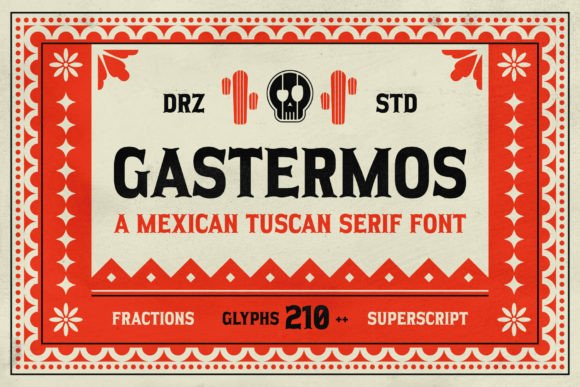
Gastermos: A Unique Fusion of Mexican and Tuscan Elegance
Gastermos is a distinctive typeface that brings together the rich visual traditions of Mexican design with the refined structure of Tuscan serif fonts. This blend creates a font that is both historically grounded and visually striking, offering a versatile option for designers, artists, and businesses looking to infuse their work with cultural depth and aesthetic appeal.
What Makes Gastermos Stand Out?
Gastermos is more than just a font—it’s a storytelling tool. Its design draws inspiration from traditional Mexican art forms, such as hand-painted signs, folk motifs, and ornate typography, while maintaining the timeless grace of Tuscan serifs. The result is a typeface that feels both authentic and sophisticated, making it ideal for projects that aim to evoke a sense of history, craftsmanship, or regional identity.
The intricate details in Gastermos, such as flourishes, subtle curves, and decorative elements, reflect the artistic heritage of Mexico. At the same time, its clean structure ensures readability, even in larger text sizes. This balance between ornamentation and clarity makes Gastermos suitable for a wide range of applications, from branding to editorial design.
Key Features of Gastermos
- Cultural Inspiration: Gastermos incorporates elements from traditional Mexican aesthetics, including handcrafted letterforms and symbolic motifs.
- Tuscan Influence: The font retains the elegance and proportion of classic Tuscan serifs, providing a refined look that complements both modern and vintage designs.
- Versatile Use: Gastermos works well in print and digital formats, making it a practical choice for logos, headings, and body text.
- High Legibility: Despite its decorative nature, Gastermos maintains strong readability, especially in medium to large sizes.
When to Use Gastermos
Designers and creators often turn to Gastermos when they want to add a touch of authenticity or visual interest to their work. Whether it’s for a restaurant menu, a wedding invitation, or a brand logo, this font can elevate the overall feel of a project.
For example, a small café looking to create a warm, welcoming atmosphere might use Gastermos for its signage or menu design. The font’s vintage charm can help convey a sense of tradition and quality, appealing to customers who value artisanal experiences.
Similarly, a boutique clothing brand aiming to highlight its connection to Mexican culture could use Gastermos in its packaging or website headers. The font’s unique character helps differentiate the brand from competitors, while still maintaining a professional appearance.
Who Benefits from Using Gastermos?
Gastermos is particularly beneficial for professionals in the following areas:
- Graphic Designers: Those working on projects with a cultural or historical theme can use Gastermos to enhance the visual narrative of their designs.
- Business Owners: Entrepreneurs looking to establish a distinct brand identity may find Gastermos useful for creating memorable logos and marketing materials.
- Artists and Illustrators: The font’s artistic qualities make it a great choice for illustrations, book covers, or other creative projects that require a personalized touch.
- Event Planners: For weddings, festivals, or cultural events, Gastermos can be used to create invitations, banners, or promotional materials that reflect the theme of the occasion.
Strengths and Considerations
Gastermos excels in situations where visual storytelling and cultural resonance are important. Its ability to blend old-world charm with modern functionality makes it a valuable asset for designers seeking to create meaningful, aesthetically pleasing work.
However, it’s important to consider the context in which Gastermos is used. While it shines in decorative or thematic applications, it may not be the best choice for body text in long-form documents. In such cases, a simpler, more neutral font would provide better readability and user experience.
Additionally, users should ensure that Gastermos is available in the appropriate language support if their project involves non-English text. Some variations of the font may have limited character sets, so checking compatibility is essential before finalizing a design.
Real-World Applications of Gastermos
One common use of Gastermos is in the hospitality industry. Restaurants, cafes, and bars often use the font to create menus, signage, or branding that reflects a specific cultural theme. For instance, a tequila bar might use Gastermos in its logo to emphasize its connection to Mexican heritage and artisanal craftsmanship.
In the realm of publishing, authors and publishers may choose Gastermos for book covers, especially for works related to history, culture, or travel. The font’s visual richness can draw readers in and set the tone for the content within.
Another practical application is in the creation of greeting cards or stationery. Gastermos adds an elegant, handcrafted feel to invitations, thank-you notes, or holiday cards, making them stand out from mass-produced alternatives.
Evaluating Suitability for Your Project
Before deciding to use Gastermos, it’s helpful to ask a few key questions. Does your project benefit from a font that conveys cultural depth or historical significance? Is the visual style of Gastermos aligned with your brand or message? Will the font maintain legibility across different mediums and sizes?
If the answers to these questions are positive, then Gastermos could be an excellent fit. However, if your goal is simplicity, neutrality, or broad accessibility, you may want to explore other options.
Ultimately, Gastermos is a powerful tool for those who want to express creativity, authenticity, and cultural appreciation through typography. By understanding its strengths and limitations, you can make an informed decision about whether it’s the right choice for your next project.